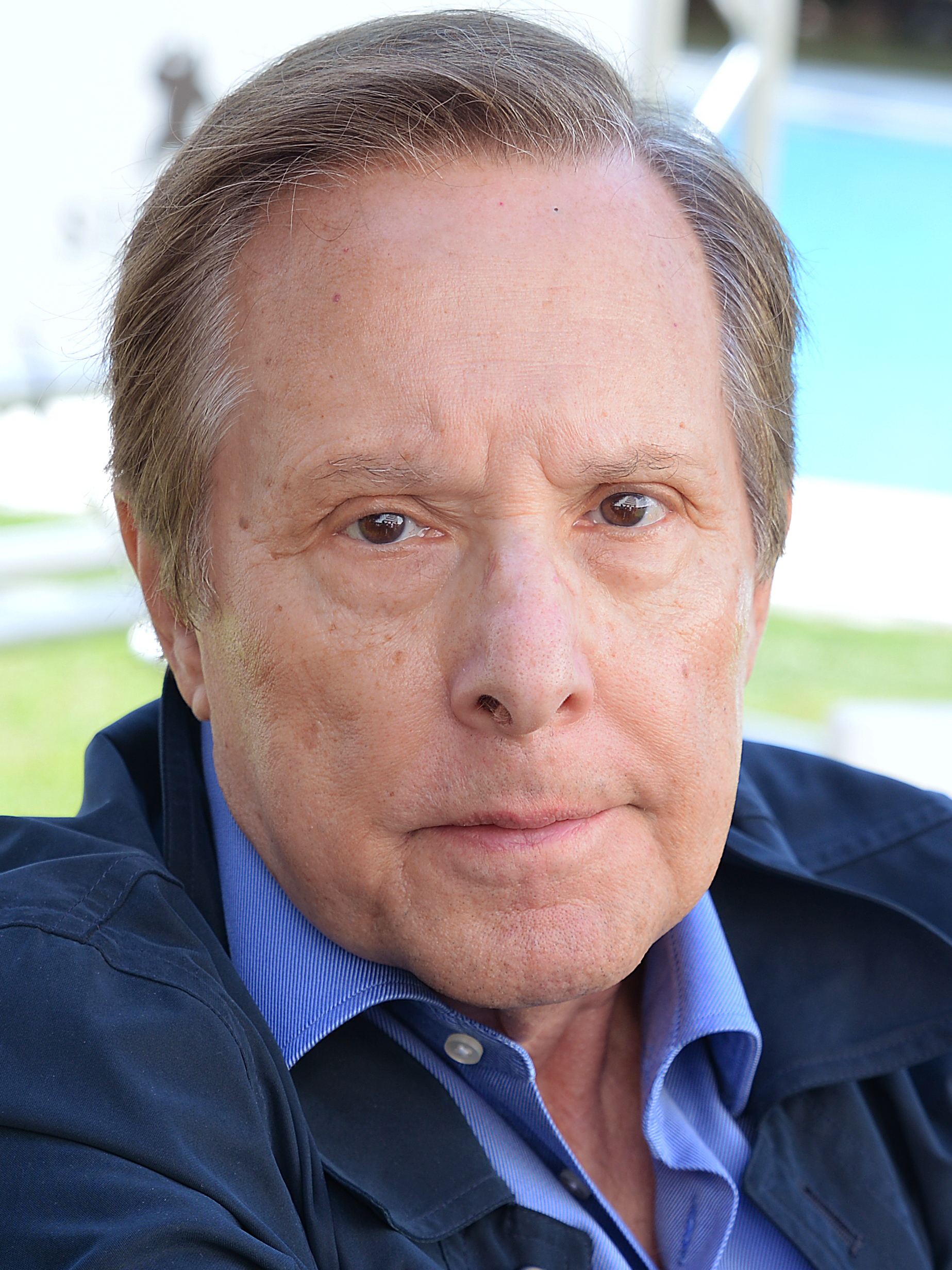
William Friedkin
American director and producer (1935–2023)
William David Friedkin (; August 29, 1935 – August 7, 2023) was an American film, television and opera director, producer, and screenwriter who was closely identified with the New Hollywood movement of the 1970s. Beginning his career in documentaries in the early 1960s, he is best known for his crime thriller film The French Connection (1971), which won five Academy Awards, including Best Picture and Best Director, and the horror film The Exorcist (1973), which earned him another Academy Award nomination for Best Director.
Friedkin's other films in the 1970s and 1980s include the drama The Boys in the Band (1970), considered a milestone of queer cinema; the originally criticized, now lauded thriller Sorcerer (1977); the crime comedy drama The Brink's Job (1978); the controversial thriller Cruising (1980); and the neo-noir thriller To Live and Die in L.A. (1985). Although Friedkin's works suffered an overall commercial and critical decline in the late 1980s, his last three feature films, all based on plays, were positively received by critics: the psychological horror film Bug (2006), the crime film Killer Joe (2011), and the legal drama film The Caine Mutiny Court-Martial (2023), released two months after his death. He also worked extensively as an opera director from 1998 until his death, and directed various television films and series episodes for television.
Early life and education
Friedkin was born in Chicago, Illinois, on August 29, 1935, the son of Rachael (née Green) and Louis Friedkin. His father was a semi-professional softball player, merchant seaman, and men's clothing salesman. His mother, whom Friedkin called "a saint," was a nurse. His parents were Jewish emigrants from Ukraine, in the Russian empire. His grandparents, parents, and other relatives fled Russia during a particularly violent anti-Jewish pogrom in 1903. Friedkin's father was somewhat uninterested in making money, and the family was generally lower middle class while he was growing up. According to film historian Peter Biskind, "Friedkin viewed his father with a mixture of affection and contempt for not making more of himself."
After attending public schools in Chicago, Friedkin enrolled at Senn High School, where he played basketball well enough to consider turning professional. He was not a serious student and barely received grades good enough to graduate, which he did at the age of 16. He said this was because of social promotion and not because he was bright.
Friedkin began going to movies as a teenager, and cited Citizen Kane as one of his key influences. Several sources claim that Friedkin saw this motion picture as a teenager, but Friedkin himself said that he did not see the film until 1960, when he was 25 years old. Only then, Friedkin said, did he become a true cineaste. Among the movies that he also saw as a teenager and young adult were Les Diaboliques, The Wages of Fear (which he remade as Sorcerer), and Psycho (which he viewed repeatedly, like Citizen Kane). Televised documentaries such as 1960's Harvest of Shame were also important to his developing sense of cinema.
Friedkin began working in the mail room at WBKB-TV immediately after high school. Within two years (at the age of 18), he started his directorial career doing live television shows and documentaries. His efforts included The People vs. Paul Crump (1962), which won an award at the San Francisco International Film Festival and contributed to the commutation of Crump's death sentence. Its success helped Friedkin get a job with producer David L. Wolper. He also made the football-themed documentary Mayhem on a Sunday Afternoon (1965).
Career
1965–1979
As mentioned in his voice-over commentary on the DVD re-release of Alfred Hitchcock's Vertigo, Friedkin directed one of the last episodes of The Alfred Hitchcock Hour in 1965, called "Off Season". Hitchcock admonished Friedkin for not wearing a tie while directing.
In 1965, Friedkin moved to Hollywood and two years later released his first feature film, Good Times starring Sonny and Cher. He has referred to the film as "unwatchable". Several other films followed: The Birthday Party, based on an unpublished screenplay by Harold Pinter, which he adapted from his own play; the musical comedy The Night They Raided Minsky's, starring Jason Robards and Britt Ekland; and the adaptation of Mart Crowley's play The Boys in the Band.
His next film, The French Connection, was released to wide critical acclaim in 1971. Shot in a gritty style more suited for documentaries than Hollywood features, the film won five Academy Awards, including Best Picture and Best Director.
In 1973 Friedkin directed The Exorcist, based on William Peter Blatty's best-selling novel, which revolutionized the horror genre and is considered by some critics to be one of the greatest horror movies of all time. The Exorcist was nominated for 10 Academy Awards, including Best Picture and Best Director. It won for Best Screenplay and Best Sound. Following these two pictures, Friedkin, along with Francis Ford Coppola and Peter Bogdanovich, was deemed one of the premier directors of New Hollywood. In 1973, the trio announced the formation of an independent production company at Paramount Pictures, The Directors Company. Whereas Coppola directed The Conversation and Bogdanovich, the Henry James adaptation, Daisy Miller, Friedkin abruptly left the company, which was soon closed by Paramount.
Friedkin's later movies did not achieve the same success. Sorcerer (1977), a $22 million American remake of the French classic The Wages of Fear, co-produced by both Universal and Paramount, starring Roy Scheider, was overshadowed by the blockbuster box-office success of Star Wars, which had been released exactly one week prior. Friedkin considered it his finest film, and was personally devastated by its financial and critical failure (as mentioned by Friedkin himself in the 1999 documentary series The Directors). Sorcerer was shortly followed by the crime-comedy The Brink's Job (1978), based on the real-life Great Brink's Robbery in Boston, Massachusetts, which was also unsuccessful at the box-office.
1980–1999
In 1980, Friedkin directed an adaptation of the Gerald Walker crime thriller Cruising, starring Al Pacino, which was protested during production and remains the subject of heated debate. It was critically assailed but performed moderately at the box office.
Friedkin had a heart attack on March 6, 1981, due to a genetic defect in his circumflex left coronary artery, and nearly died. He spent months in rehabilitation. His next picture was 1983's Deal of the Century, a satire about arms dealing starring Chevy Chase, Gregory Hines, and Sigourney Weaver. In 1984, he became one of the first Academy Award-winning directors to direct a music video, directing Laura Branigan's Self Control.
In 1985, Friedkin directed the music video for Barbra Streisand's rendition of the West Side Story song "Somewhere", which she recorded for her twenty-fourth studio LP, The Broadway Album. He later appears as Streisand's interviewer (uncredited) on the television special, "Putting It Together: The Making of the Broadway Album".
The action/crime movie To Live and Die in L.A. (1985), starring William Petersen and Willem Dafoe, was a critical favorite and drew comparisons to Friedkin's own The French Connection (particularly for its car chase sequence), while his courtroom drama/thriller Rampage (1987) received a fairly positive review from Roger Ebert. He next directed the cult classic horror film The Guardian (1990) and the thriller Jade (1995), starring Linda Fiorentino. Though the latter received an unfavorable response from critics and audiences, he said it was one of the favorite films he directed.
2000–2023
In 2000, The Exorcist was re-released in theaters with extra footage and grossed $40 million in the U.S. alone. Friedkin directed the 2006 film Bug due to a positive experience watching the stage version in 2004. He was surprised to find that he was, metaphorically, on the same page as the playwright and felt that he could relate well to the story. The film won the FIPRESCI prize at the Cannes Film Festival. Later, Friedkin directed an episode of the TV series CSI: Crime Scene Investigation titled "Cockroaches", which re-teamed him with To Live and Die in L.A. star William Petersen. He directed again for CSI's 200th episode, "Mascara".
Content sourced from Wikipedia under CC BY-SA 4.0


