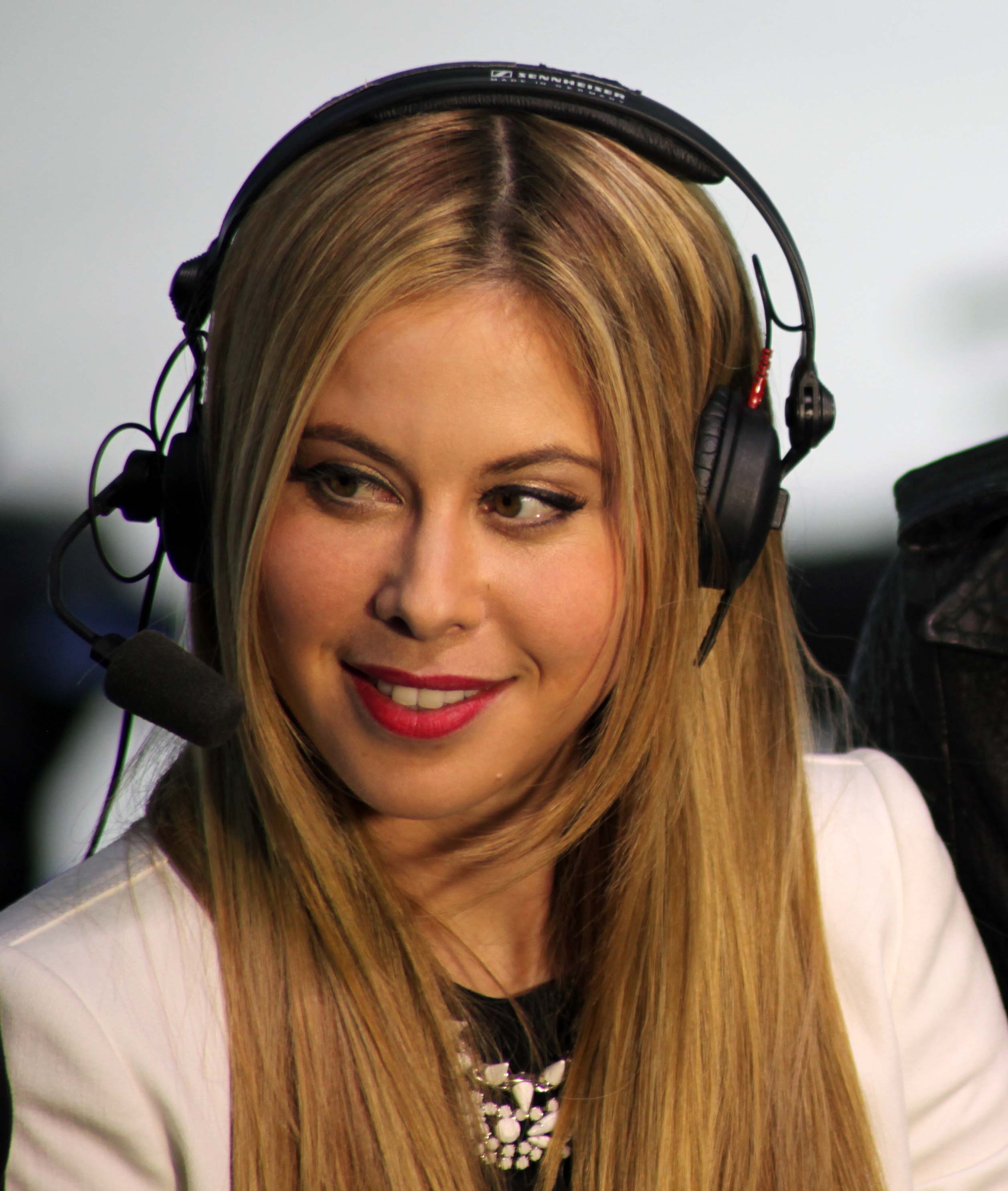
Tara Lipinski
American sports commentator and figure skater (born 1982)
Tara Kristen Lipinski (born June 10, 1982) is an American sports commentator and former competitive figure skater. A former competitor in women's singles, she was the 1997 U.S. national champion and world champion, a two-time Champions Series Final champion (1997–1998), and the 1998 Olympic champion. She is the youngest single skater Olympic champion and World champion ever, and until 2019 was the youngest to win the U.S. Nationals. She was the first woman to complete a triple loop–triple loop combination, which became her signature jump element, in competition.
Lipinski retired from competitive figure skating in 1998. She performed in live shows before retiring from figure skating in 2002. In 2014, Lipinski became one of NBC's primary figure skating commentators, alongside sports commentator Terry Gannon and fellow figure skater and good friend Johnny Weir.
Early life
Lipinski was born on June 10, 1982, in Philadelphia. Her mother is "Pat" Lipinski, and her father is Jack Lipinski, an oil executive. They are of Polish Catholic ancestry. She spent her earliest years living in the suburb Sewell, New Jersey. When Lipinski was two, while watching the 1984 Summer Olympics, she stood on a Tupperware bowl and pretended to be a gold medalist. At the age of three she began roller skating, and became a national champion in her group when she was nine years old. She began figure skating in the same year, transferring her skills to the ice rink. She later switched exclusively to figure skating and took lessons at the University of Delaware.
In 1991 Lipinski's father received a job promotion, so the family moved to Sugar Land, Texas, near Houston. She trained on a public rink at The Galleria. Two years later, Lipinski and her mother returned to Delaware to resume her training there with coach Jeff DiGregorio, who had worked with Lipinski, on and off, for three years before their move to Texas. Her father stayed in Texas working to support their family. In 1995, Lipinski and her mother transferred to Bloomfield Hills, Michigan, to train with coach Richard Callaghan at the Detroit Skating Club.
Competitive career
Early years
In 1994, Lipinski earned a silver medal in the novice women's division at the 1994 U.S. Figure Skating Championships. When she was 12, she became the youngest athlete to win a gold medal at the 1994 U.S. Olympic Festival. She then took first place in November in the Blue Swords in Chemnitz, Germany, her first international competition, after which the media began to notice her. As a junior skater, she came in fourth place at the 1995 World Junior Championships and came in second place at the 1995 U.S. Championships. In late 1995, she placed fifth at the 1996 World Junior Championships, which marked the end of the relationship between DiGregorio and the Lipinskis.
After a series of interviews conducted by Lipinski and her mother, as well as sample lessons given to Lipinski by prospective figure skating coaches from around the country, they hired Richard Callaghan. In January 1996, Lipinski won a bronze medal as a senior-level skater at the 1996 U.S. Championships. Despite low expectations, she closed out the 1995–96 season and gained international attention by qualifying for the 1996 World Championships. With very low expectations at the event, she placed 23rd after the short program, but her free skate, which included seven triple jumps, brought her up to 15th place.
1996–97 season
Lipinski and Callaghan spent the next year making her appear more mature; she enrolled in ballet classes and hired choreographer Sandra Bezic to "create programs for Lipinski that expressed delight yet looked adult". In late 1996, she added the triple loop-triple loop jump combination, which added technical difficulty to her programs. She was the first woman to complete the jump combination in competition. Lipinski competed in the ISU Champions Series (later renamed the ISU Grand Prix of Figure Skating) during the 1996–97 season; she finished in second place at Skate Canada, third at Trophée Lalique, and second at the 1996 Nations Cup. She won the gold medal at the Champion Series Final and defeated Michelle Kwan by completing more successful jumps in her short and free programs.
In February 1997, at the age of 14, Lipinski became the youngest skater to win a U.S. Championships title. She broke the record set by Sonya Klopfer, who was 15 when she won the U.S. Nationals in 1951. She defeated Kwan, the reigning 1996 U.S. champion, who won the short program. Kwan fell twice and landed only four out of her seven planned triple jumps in her free skate, leaving the door open for Lipinski's victory. She was the last skater to perform in the competition's free skating segment; she skated cleanly with seven triple jumps, including her signature jump element, the triple loop-triple loop combination, and came in first place. According to author Ed Swift from Sports Illustrated, the 1997 U.S. Nationals marked the start of the Kwan–Lipinski rivalry.
A month later, Lipinski won the 1997 World Championships, becoming the youngest female skater to win that event. She was a month younger than the previous record holder, Sonja Henie from Norway, when she won the first of her ten World Championships in 1927. Lipinski completed seven triple jumps, as she had done at the U.S. Nationals and the Champion Series Final, and finished in first place after the short program. She also completed two double Axels, but one rival coach noted the small height of her jumps, stating that "you couldn't have put a piece of paper under them". Her presentation marks were mostly 5.7s or 5.8s and similar to her technical marks. Three out of four judges gave her higher presentation than technical marks.
Reporter Jere Longman of The New York Times called Lipinski's free skate "a light, airy performance" and said she was "composed and nearly flawless". Lipinski opened with a double Axel and landed a triple flip jump as well as her triple loop-triple loop combination, among others. She received 5.8s and 5.9s in her technical marks and a 5.7 and 5.8 for presentation. The final results after the free skate were close, and the judges were unable to declare a clear winner of the free skate. Lipinski, Kwan—who was fourth after the short program—and Russian skater Irina Slutskaya all received first-place votes. Kwan's free skate came in first place because she had more first- and second-place votes, and Lipinski came in first place overall because she received more second-place votes in the free skate than Slutskaya. If two more judges had placed Slutskaya before Lipinski after the free skate, Kwan would have won the competition instead of coming in second place. It was the first time the U.S. had finished first and second at Worlds since 1992, when Kristi Yamaguchi won the gold medal and Nancy Kerrigan silver.
1997–98 season
Pre-Olympic season
Between seasons, Lipinski grew two inches and turned 15 years old. She went into the 1997–98 season by continuing to add more sophistication to her programs by taking daily dance classes from Russian ballet teacher Marina Sheffer. She selected film scores for both her short and free skate programs, with the choreographies being created by Sandra Bezic. According to figure skating writer and historian Ellyn Kestnbaum, the American press played up "the Kwan–Lipinski rivalry for all it was worth".
At the 1997 Skate America, Kwan defeated Lipinski for the first time in three competitions and won the gold medal. Lipinski came in second place after Kwan in both the short program and free skate, taking second place overall. Despite performing more difficult jumps than Kwan during her short program, Lipinski consistently received lower technical marks. During her free skate, she fell on a triple Lutz jump, but performed an otherwise technically difficult and strong program. According to Kestnbaum, Callaghan "expressed bewilderment in why the judges had so marked down the reigning World champion, who by virtue of that position might otherwise have been expected to receive the benefit of any doubt". Lipinski came in second place at Trophée Lalique, behind French skater Laetitia Hubert, who had not won any major competitions since the 1992 World Junior Championships and who came in eleventh place at her previous competition.
Content sourced from Wikipedia under CC BY-SA 4.0


