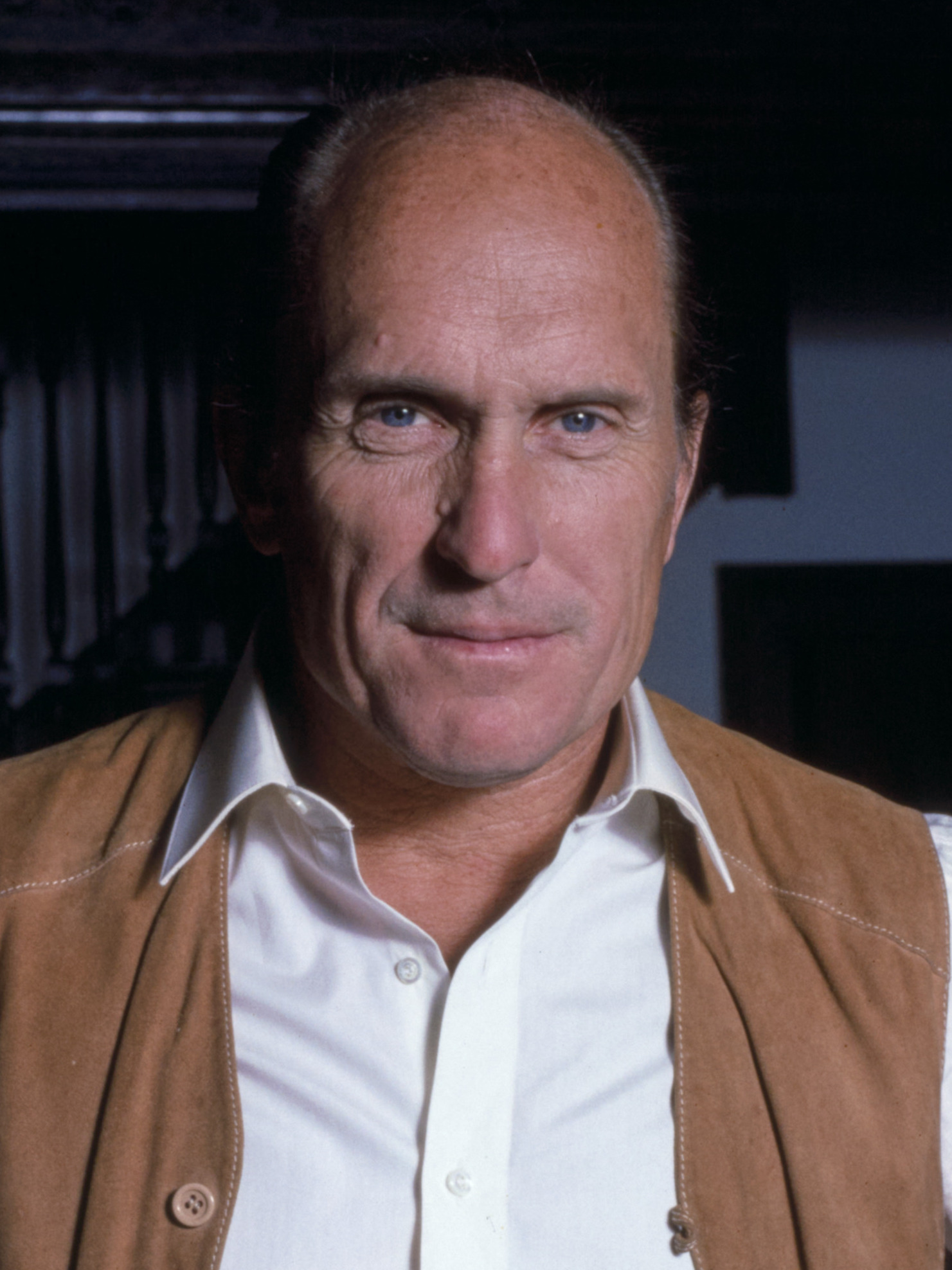
Robert Duvall
American actor and filmmaker (1931–2026)
Robert Selden Duvall (; January 5, 1931 – February 15, 2026) was an American actor, filmmaker, and producer, best known for his roles in the later 20th century of Hollywood. Duvall began acting professionally on stage in 1952, performing in summer plays at the Gateway Playhouse in Bellport on Long Island until 1959, with a one-year break serving in the U.S. Army. He made contacts there that then led to a career on television in the 1960s on shows such as The Defenders, Playhouse 90, and Armstrong Circle Theatre. He made his Broadway debut in the play Wait Until Dark in 1966, and, in 1977, he returned from screen acting to the stage in David Mamet's play American Buffalo, earning a Drama Desk Award for Outstanding Actor in a Play nomination.
He made his feature film debut portraying Boo Radley in To Kill a Mockingbird (1962). His other early roles included Bullitt (1968), True Grit (1969), M*A*S*H (1970), THX 1138 (1971) and Tomorrow (1972), the last of which was developed at the Actors Studio and was his personal favorite. Duvall won the Academy Award for Best Actor for his performance as an alcoholic former country music star in Tender Mercies (1983). His other Oscar-nominated roles included The Godfather (1972), Apocalypse Now (1979), The Great Santini (1979), The Apostle (1997), A Civil Action (1998), and The Judge (2014). Throughout his career, Duvall also starred in numerous television productions. He won the Primetime Emmy Award for Outstanding Limited Series and Outstanding Lead Actor in a Limited Series for the AMC limited series Broken Trail (2006). His other Emmy-nominated roles included the CBS miniseries Lonesome Dove (1989), the HBO film Stalin (1992), and the TNT film The Man Who Captured Eichmann (1996).
With a career spanning seven decades, he received an Academy Award, a BAFTA Award, four Golden Globe Awards, two Primetime Emmy Awards, two Volpi Cups for Best Actor, and a Screen Actors Guild Award. He was critically acclaimed for his technical proficiency and chameleon-like ability to assume a convincing role. Vincent Canby dubbed him "the American Olivier" in 1980 and this label stuck.
Early life, family and education
Robert Selden Duvall was born January 5, 1931, in San Diego, California, to Mildred Virginia Duvall (née Hart), an amateur actress, and Rear Admiral William Howard Duvall of the United States Navy. The second of three sons, he grew up alongside an elder brother, William Jr., and a younger brother, John, who later became an entertainment lawyer. His father was from Virginia and descended from early Maryland settler Mareen Duvall.
Duvall was raised in the Christian Science religion, though he later noted that he did not attend church. He spent much of his childhood in Annapolis, Maryland, where his father was stationed at the United States Naval Academy. He attended Severn School in Severna Park, Maryland, and The Principia in St. Louis, Missouri, before graduating with a Bachelor of Arts degree in drama from Principia College in Elsah, Illinois, in 1953.
His father had expected him to attend the US Naval Academy, but Duvall recalled, "I was terrible at everything but acting—I could barely get through school". He instead served in the United States Army after the Korean War, from August 19, 1953, to August 20, 1954, leaving as private first class. "That's led to some confusion in the press," he explained in 1984, "Some stories have me shooting it out with the Commies from a foxhole over in Frozen Chosin. Pork Chop Hill stuff. Hell, I barely qualified with the M-1 rifle in basic training". While stationed at Camp Gordon in Georgia, he appeared in an amateur production of the comedy Room Service in nearby Augusta.
In the winter of 1955, Duvall attended the Neighborhood Playhouse School of the Theatre in New York City, studying under Sanford Meisner on the G.I. Bill. His classmates included Gene Hackman and James Caan. While training, he worked as a Manhattan post office clerk. Until his death, he remained close friends with fellow California-born actors Dustin Hoffman and Hackman (who died in 2025), whom he had known since their years as struggling actors. In 1955, Duvall roomed with Hoffman in a New York City apartment while they studied together at the Playhouse, and around the same time also shared accommodation with Hackman while working odd jobs such as clerking at Macy's, sorting mail, and driving a truck.
Career
Early career: 1952–1969
Theater
Duvall began his professional acting career with the Gateway Playhouse, an Equity summer theater based in Bellport, Long Island, New York. His stage debut was in its 1952 season, when he played the Pilot in Laughter in the Stars, an adaptation of The Little Prince, at what was then the Gateway Theatre.
After a year away while serving in the U.S. Army (1953–1954), he returned to Gateway for its 1955 summer season, appearing as Eddie Davis in Ronald Alexander's Time Out for Ginger (July 1955), Hal Carter in William Inge's Picnic (July 1955), Charles Wilder in John Willard's The Cat and the Canary (August 1955), Parris in Arthur Miller's The Crucible (August 1955), and John the Witchboy in William Berney and Howard Richardson's Dark of the Moon (September 1955). The playbill for Dark of the Moon noted that he had portrayed the Witchboy previously and would "repeat his famous portrayal" for the 1955 revival.
During Gateway's 1956 season, his third with the company, Duvall played Max Halliday in Frederick Knott's Dial M for Murder (July 1956), Virgil Blessing in Inge's Bus Stop (August 1956), and Clive Mortimer in John Van Druten's I Am a Camera (August 1956). Playbills that year described him as "an audience favorite" in the last season and as having "appeared at the Neighborhood Playhouse in New York and studied acting with Sandy Meisner this past winter".
In its 1957 season, Duvall appeared as Mr. Mayher in Agatha Christie's Witness for the Prosecution (July 1957), as Hector in Jean Anouilh's Thieves' Carnivall (July 1957), and the role which he once described as the "catalyst of his career": Eddie Carbone in Arthur Miller's A View from the Bridge, from July 30 to August 3, 1957, and directed by Ulu Grosbard, who was by then a regular director at the Gateway Theatre. Miller himself attended one of Duvall's performances as Eddie, and during that performance he met important people which allowed him, in two months, to land a "spectacular lead" in the Naked City television series.
While appearing at the Gateway Theatre in the second half of the 1950s, Duvall was also appearing at the Augusta Civic Theatre, the McLean Theatre in Virginia and the Arena Stage in Washington, D.C. The 1957 playbills also described him as "a graduate of the Neighborhood Playhouse" (indicating that he had completed his studies there by the summer of 1957), "a member of Sanford Meisner's professional workshop" and as having worked with Alvin Epstein, a mime and a member of Marcel Marceau's company. By this time, also July 1957, his theatrical credits included performances as Jimmy in The Rainmaker and as Harvey Weems in Horton Foote's The Midnight Caller.
Already receiving top-billing at the Gateway Playhouse, in the 1959 season, he appeared in lead roles as Stanley Kowalski in Tennessee Williams' A Streetcar Named Desire (July–August 1959), Maxwell Archer in Once More with Feeling, Igor Romanoff in Peter Ustinov's Romanoff and Juliet, and Joe Mancuso in Kyle Crichton's The Happiest Millionaire (all in August 1959).
At the Neighborhood Playhouse, Meisner cast him in Tennessee Williams' Camino Real and the title role of Harvey Weems in Foote's one-act play The Midnight Caller. The latter was already part of Duvall's performance credits by mid-July 1957.
Duvall made his off-Broadway debut at the Gate Theater as Frank Gardner in George Bernard Shaw's Mrs. Warren's Profession on June 25, 1958. This play closed three days later (June 28) after five performances. His other early off-Broadway credits include the role of Doug in the premiere of Michael Shurtleff's Call Me by My Rightful Name on January 31, 1961, at One Sheridan Square and the role of Bob Smith in the premiere of William Snyder's The Days and Nights of BeeBee Fenstermaker on September 17, 1962, until June 9, 1963, at the Sheridan Square Playhouse.
His most notable off-Broadway performance, for which he won an Obie Award in 1965 and which he considered his "Othello", was as Eddie Carbone, again, in Miller's A View from the Bridge at the Sheridan Square Playhouse from January 28, 1965, to December 11, 1966. It was directed again by Ulu Grosbard with Dustin Hoffman. On February 2, 1966, he made his Broadway debut as Harry Roat, Jr in Frederick Knott's Wait Until Dark at the Ethel Barrymore Theatre. This played at the Shubert Theatre and George Abbott Theatre and closed on December 31, 1966, at the Music Box Theatre. His other Broadway performance was as Walter Cole in David Mamet's American Buffalo, which opened at the Ethel Barrymore Theatre on February 16, 1977, and closed at the Belasco Theatre on June 11, 1977.
Content sourced from Wikipedia under CC BY-SA 4.0


