Radio control
Use of radio signals to remotely control a device, vehicle or drone
Why this is trending
Interest in “Radio control” spiked on Wikipedia on 2026-02-25.
Categorised under History, this article fits a familiar pattern. History articles often trend on anniversaries of notable events, when historical parallels are drawn in the news, or following popular media portrayals.
GlyphSignal tracks these patterns daily, turning raw Wikipedia traffic data into a curated feed of what the world is curious about. Every spike tells a story.
Key Takeaways
- Radio control (often abbreviated to RC ) is the use of control signals transmitted by radio to remotely operate a device.
- Radio control is also used for control of model vehicles from a hand-held radio transmitter.
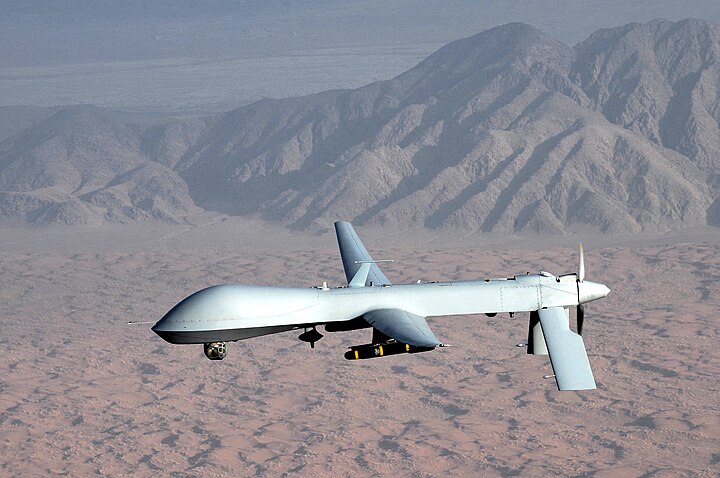
- A rapidly growing application is control of unmanned aerial vehicles (UAVs or drones) for both civilian and military uses, although these have more sophisticated control systems than traditional applications.
- The latter half of the 1800s saw development of many such devices, connected to an operator by wires, including the first practical application invented by German engineer Werner von Siemens in 1870.
- In 1897 British engineer Ernest Wilson and C.
Radio control (often abbreviated to RC) is the use of control signals transmitted by radio to remotely operate a device. Examples of simple radio control systems are garage door openers and keyless entry systems for vehicles, in which a small handheld radio transmitter unlocks or opens doors. Radio control is also used for control of model vehicles from a hand-held radio transmitter. Industrial, military, and scientific research organizations make use of radio-controlled vehicles as well. A rapidly growing application is control of unmanned aerial vehicles (UAVs or drones) for both civilian and military uses, although these have more sophisticated control systems than traditional applications.
History
The idea of controlling unmanned vehicles (for the most part in an attempt to improve the accuracy of torpedoes for military purposes) predates the invention of radio. The latter half of the 1800s saw development of many such devices, connected to an operator by wires, including the first practical application invented by German engineer Werner von Siemens in 1870.
Getting rid of the wires via using a new wireless technology, radio, appeared in the late 1890s. In 1897 British engineer Ernest Wilson and C. J. Evans patented a radio-controlled torpedo or demonstrated radio-controlled boats on the Thames river (accounts of what they did vary). At an 1898 exhibition at Madison Square Garden, Nikola Tesla demonstrated a small boat that used a coherer-based radio control. With an eye towards selling the idea to the US government as a torpedo, Tesla's 1898 patent included a clockwork frequency changer so an enemy could not take control of the device.
Content sourced from Wikipedia under CC BY-SA 4.0


