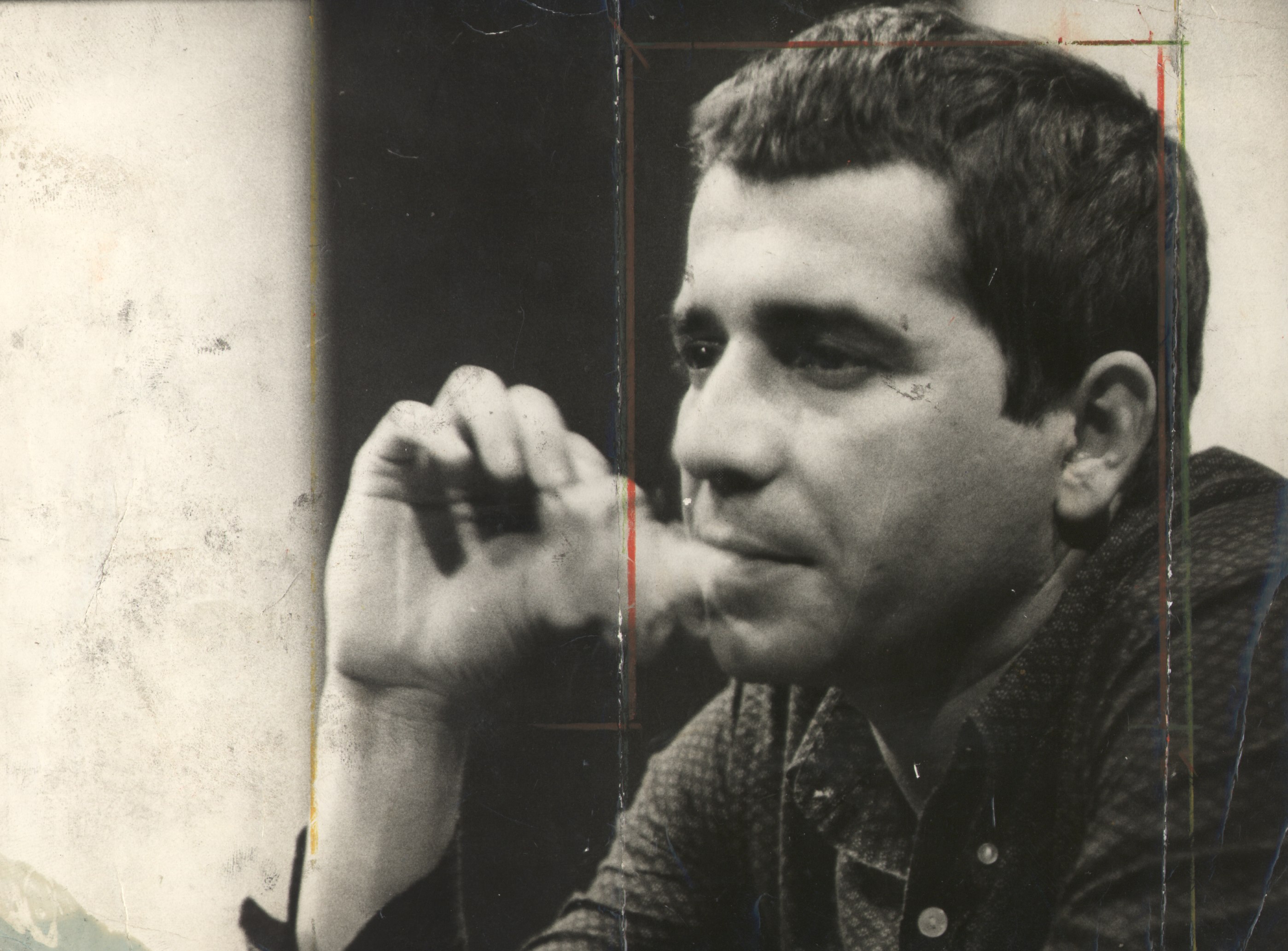
Plínio Marcos
Brazilian writer & actor (1935–1999)
Why this is trending
Interest in “Plínio Marcos” spiked on Wikipedia on 2026-02-24.
Categorised under Entertainment, this article fits a familiar pattern. Articles in the entertainment category often trend when tied to award ceremonies, film releases, celebrity news, or viral social media moments.
At GlyphSignal we surface these trending signals every day—transforming Wikipedia’s vast pageview data into actionable insights about global curiosity.
Key Takeaways
- Plínio Marcos de Barros (29 September 1935 — 19 November 1999) was a Brazilian writer, actor, journalist and playwright, author of several stage plays adapted into film.
- Early life Marcos was born in 1935, in Santos, into a poor family.
- Marcos worked as coppersmith, served the Brazilian Air Force and played football for Portuguesa Santista, but he found his way into acting working as a circus clown when he was 17 years old.
- In 1958, influenced by the writer and journalist Pagu, he got into a Santos amateur theater company.
- Because of its crude language, the play was prohibited from being staged for 21 years.
Plínio Marcos de Barros (29 September 1935 — 19 November 1999) was a Brazilian writer, actor, journalist and playwright, author of several stage plays adapted into film. Called a "Poète maudit" by some, his work features the life and struggles of underground characters, touching themes such as violence, prostitution and homosexuality, and was censored by the military government.
Early life
Marcos was born in 1935, in Santos, into a poor family. He finished only the primary school before dropping out. Marcos worked as coppersmith, served the Brazilian Air Force and played football for Portuguesa Santista, but he found his way into acting working as a circus clown when he was 17 years old. He also acted in the radio and television, in Santos.
In 1958, influenced by the writer and journalist Pagu, he got into a Santos amateur theater company. That same year, impressed by the true story of a young man gang-raped in prison, he wrote his first play, Barrela. Because of its crude language, the play was prohibited from being staged for 21 years.
In 1960, at the age of 25, he went to São Paulo, where he initially worked as a street vendor. Later, he worked in theater, as an actor (appearing in the TV Tupi series O Falcão Negro), administrator and handyman, in theater companies like Arena, Cacilda Becker and Nydia Lycia. From 1963, he produced texts for the TV Tupi show TV de Vanguarda, where he also worked as a technician. In 1964, year of the military coup, he made the script for the show Nossa gente, Nossa Música. In 1965, he managed to stage Reportagem de um tempo mau, a collage of texts by several authors, and that was only one day in the theaters.
Content sourced from Wikipedia under CC BY-SA 4.0


