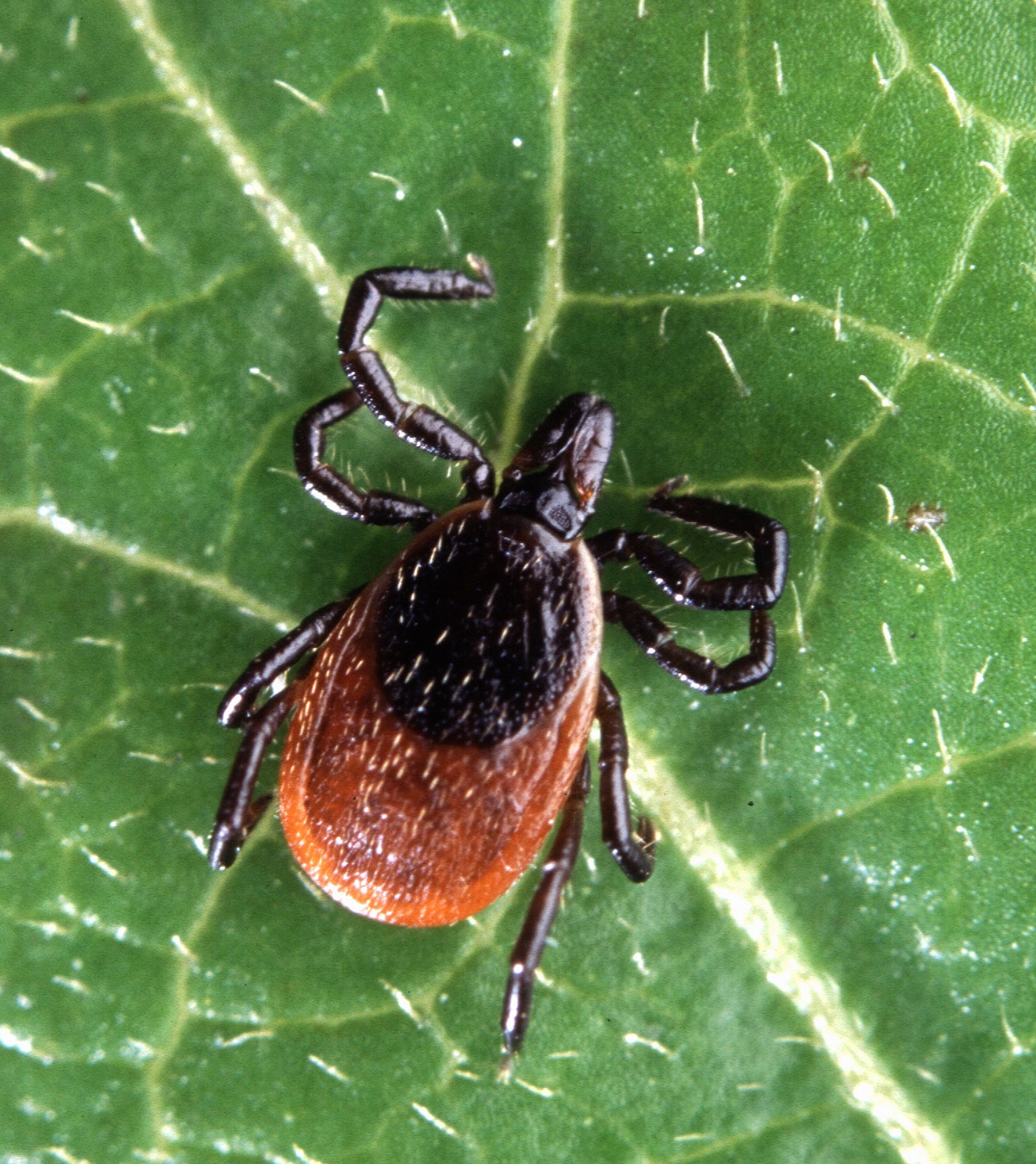
Lyme disease
Infectious disease caused by Borrelia bacteria, spread by ticks
Lyme disease, also known as Lyme borreliosis, is a tick-borne disease caused by species of Borrelia bacteria, transmitted by blood-feeding ticks in the genus Ixodes. It is the most common disease spread by ticks in the Northern Hemisphere. Infections are most common in the spring and early summer. Infection is treatable with antibiotics. Most treated patients experience a full recovery. For some patients recovery may not be immediate or complete, resulting in long-term effects. Early detection and prompt treatment are associated with more favorable outcomes.
The most common sign of infection is an expanding red rash, known as erythema migrans (EM), which appears at the site of the tick bite about a week afterwards. The rash is typically neither itchy nor painful. Approximately 70–80% of infected people develop a rash. Other early symptoms may include fever, headaches and tiredness. If untreated, symptoms may include loss of the ability to move one or both sides of the face, joint pains, severe headaches with neck stiffness or heart palpitations. Months to years later, repeated episodes of joint pain and swelling may occur. Occasionally, shooting pains or tingling in the arms and legs may develop.
Diagnosis is based on a combination of symptoms, history of tick exposure, and possibly testing for specific antibodies in the blood. If an infection develops, several antibiotics are effective, including doxycycline, amoxicillin and cefuroxime. Standard treatment usually lasts for two or three weeks. People with persistent symptoms after appropriate treatments are said to have post-treatment Lyme disease syndrome (PTLDS).
Prevention includes efforts to prevent tick bites by wearing clothing to cover the arms and legs and using DEET or picaridin-based insect repellents. As of 2023, clinical trials of proposed human vaccines for Lyme disease were being carried out, but no vaccine was available. A vaccine, LYMERix, was produced but discontinued in 2002 due to insufficient demand. There are several vaccines for the prevention of Lyme disease in dogs.
Signs and symptoms
Lyme disease can produce a broad range of symptoms.
The incubation period is usually one to two weeks, but can be much shorter (days) or much longer (months to years). Lyme symptoms most often occur from May to September in the Northern Hemisphere because the nymphal stage of the tick is responsible for most cases.
Early localized infection
Approximately 80% of Lyme infections begin with a rash of some sort at the site of a tick bite, often near skin folds such as the armpit, groin, back of the knee, or the trunk under clothing straps, or in children's hair, ears, or neck. Most people who get infected do not remember seeing a tick or a bite. The rash appears typically one or two weeks (range 3–32 days) after the bite and expands 2–3 cm (around 1 inch) per day up to a diameter of 5–70 cm (2 to 28 inches) (median is 16 cm; 6 inches).
The rash is usually circular or oval, red or bluish, and may have an elevated or darker center. This rash is termed an erythema migrans (EM), which translates as "migrating redness." In approximately 79% of cases in Europe, this rash gradually clears from the center toward the edges, possibly forming a "bull's eye" or "target-like" pattern. This clearing only happens in 19% of cases in endemic areas of the United States. The rash may feel warm, usually is not itchy, is rarely tender or painful, and takes up to four weeks to resolve if untreated.
The Lyme rash is often accompanied by symptoms of a flu-like illness, including fatigue, headache, body aches, fever, and chills [though usually neither nausea nor upper-respiratory problems]. These symptoms may also appear without a rash or linger after the rash has disappeared. Lyme can progress to later stages without a rash or these symptoms.
People with high fever for more than two days or whose other symptoms of viral-like illness do not improve despite antibiotic treatment for Lyme disease, or who have abnormally low levels of white or red cells or platelets in the blood, should be investigated for possible coinfection with other tick-borne diseases such as ehrlichiosis and babesiosis.
Not everyone with Lyme disease has all the symptoms. Many of these symptoms can also occur with other diseases. This can make obtaining a diagnosis particularly challenging, especially with the rise of co-infection.
Asymptomatic infection exists, but some studies suggest that this occurs in less than 7% of infected individuals in the United States as opposed to about 50–70% of cases in Europe.
Early disseminated infection
Within days to weeks after the onset of local infection, the Borrelia bacteria may spread through the lymphatic system or bloodstream. In 10–20% of untreated cases, EM rashes develop at sites across the body that bear no relation to the original tick bite. Transient muscle pains and joint pains are also common.
In about 10–15% of untreated people, Lyme causes neurological problems known as neuroborreliosis. Early neuroborreliosis typically appears 4–6 weeks (range 1–12 weeks) after the tick bite and involves some combination of lymphocytic meningitis, cranial neuritis, radiculopathy, and/or mononeuritis multiplex. Lymphocytic meningitis causes characteristic changes in the cerebrospinal fluid (CSF) and may be accompanied for several weeks by variable headache and, less commonly, usually mild meningitis signs such as inability to flex the neck fully and intolerance to bright lights but typically no or only very low fever. After several months neuroborreliosis can also present otolaryngological symptoms. Up to 76.5% of them present as tinnitus, the most common symptom. Vertigo and dizziness (53.7%) and hearing loss (16.7%) were the next most common symptoms. In children, partial loss of vision may also occur. Cranial neuritis is an inflammation of cranial nerves. When due to Lyme, it most typically causes facial palsy, impairing blinking, smiling, and chewing on one or both sides of the face. It may also cause intermittent double vision. Lyme radiculopathy is an inflammation of spinal nerve roots that often causes pain and less often weakness, numbness, or altered sensation in the areas of the body served by nerves connected to the affected roots, e.g. limb(s) or part(s) of trunk. The pain is often described as unlike any other previously felt, excruciating, migrating, worse at night, rarely symmetrical, and often accompanied by extreme sleep disturbance. Mononeuritis multiplex is an inflammation causing similar symptoms in one or more unrelated peripheral nerves. Rarely, early neuroborreliosis may involve inflammation of the brain or spinal cord, with symptoms such as confusion, abnormal gait, ocular movements, or speech, impaired movement, impaired motor planning, or shaking.
In North America, facial palsy is the typical early neuroborreliosis presentation, occurring in 5–10% of untreated people, in about 75% of cases accompanied by lymphocytic meningitis. Lyme radiculopathy is reported half as frequently, but many cases may be unrecognized. In European adults, the most common presentation is a combination of lymphocytic meningitis and radiculopathy known as Bannwarth syndrome, accompanied in 36-89% of cases by facial palsy. In this syndrome, radicular pain tends to start in the same body region as the initial erythema migrans rash, if there was one, and precedes possible facial palsy and other impaired movement. In extreme cases, permanent impairment of motor or sensory function of the lower limbs may occur. In European children, the most common manifestations are facial palsy (in 55%), other cranial neuritis, and lymphocytic meningitis (in 27%).
In about 4–10% of untreated cases in the United States and 0.3–4% of untreated cases in Europe, typically between June and December, about one month (range 4 days to 7 months) after the tick bite, the infection may cause heart complications known as Lyme carditis. Symptoms may include heart palpitations (in 69% of people), dizziness, fainting, shortness of breath, and chest pain. Other symptoms of Lyme disease may also be present, such as EM rash, joint aches, facial palsy, headaches, or radicular pain. In some people, however, carditis may be the first manifestation of Lyme disease. Lyme carditis in 19–87% of people adversely impacts the heart's electrical conduction system, causing atrioventricular block that often manifests as heart rhythms that alternate within minutes between abnormally slow and abnormally fast. In 10–15% of people, Lyme causes myocardial complications such as cardiomegaly, left ventricular dysfunction, or congestive heart failure.
Another skin condition, found in Europe but not in North America, is borrelial lymphocytoma, a purplish lump that develops on the ear lobe, nipple, or scrotum.
Late disseminated infection
Lyme arthritis occurs in up to 60% of untreated people, typically starting about six months after infection. It usually affects only one or a few joints, often a knee or possibly the hip, other large joints, or the temporomandibular joint. Usually, large joint effusion and swelling occur, but only mild or moderate pain. Without treatment, swelling and pain typically resolve over time, but periodically return. Baker's cysts may form and rupture.
Content sourced from Wikipedia under CC BY-SA 4.0


