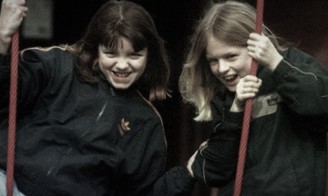
Elfie Donnelly
British-Austrian author
Why this is trending
Interest in “Elfie Donnelly” spiked on Wikipedia on 2026-02-26.
Categorised under Entertainment, this article fits a familiar pattern. Articles in the entertainment category often trend when tied to award ceremonies, film releases, celebrity news, or viral social media moments.
By monitoring millions of daily Wikipedia page views, GlyphSignal helps you spot cultural moments as they happen and understand the stories behind the numbers.
Key Takeaways
- Elfie Donnelly (born 14 January 1950) is a British-Austrian author, who has written numerous books and radio dramas for children.
- Biography Donnelly spent her early childhood in Rugby in the English Midlands, and moved to Vienna in her later childhood.
- In Vienna, she worked as a texter in the news agency APA, where her mother had also worked.
- She won the German prize for youth literature with her first book.
- At present she lives with her current husband, author Paul Arató, in Ibiza.
Elfie Donnelly (born 14 January 1950) is a British-Austrian author, who has written numerous books and radio dramas for children. Her major works are Bibi Blocksberg and Benjamin Blümchen.
Biography
Donnelly spent her early childhood in Rugby in the English Midlands, and moved to Vienna in her later childhood. The daughter of an Irish father and an Austrian mother, she started a career in journalism already in her youth. In Vienna, she worked as a texter in the news agency APA, where her mother had also worked. In 1973, she moved to West Berlin, married Peter Lustig and started writing Hörspiele (audio dramas) for children. She won the German prize for youth literature with her first book. In the 1980s, she became a disciple of Indian mystic Osho. At present she lives with her current husband, author Paul Arató, in Ibiza. Donnelly's two grown-up sons live in Austria and America.
Works
At age 26, Donnelly published her first book: Servus Opa, sagte ich leise, a story of a small boy telling about the death of his grandfather. The book won the German youth literature prize and the Hans-im-Glück prize in 1978. The book about the accompanying TV series won the Adolf Grimme prize in 1979.
Content sourced from Wikipedia under CC BY-SA 4.0