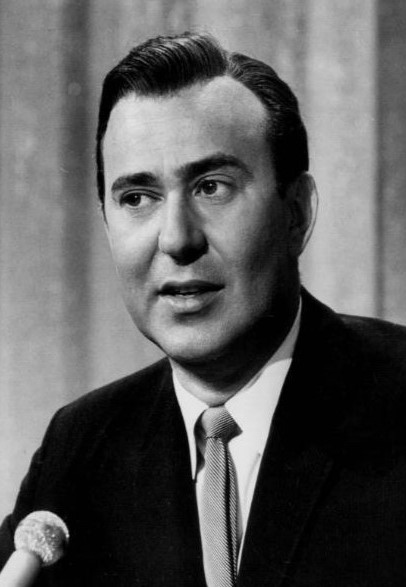
Carl Reiner
American actor (1922–2020)
Carl Reiner (; March 20, 1922 – June 29, 2020) was an American actor, author, comedian, director and screenwriter whose career spanned seven decades. His awards and honors include 12 Primetime Emmy Awards, a Grammy Award, and the Mark Twain Prize for American Humor. He was inducted into the Television Hall of Fame in 1999.
During the early years of television comedy from 1950 to 1957, he appeared in and contributed sketch material for Your Show of Shows and Caesar's Hour (both of which starred Sid Caesar), writing alongside Mel Brooks, Neil Simon, and Woody Allen. Reiner teamed up with Brooks and together they released several iconic comedy albums, beginning with 2000 Years with Carl Reiner and Mel Brooks (1960). Reiner was also the creator of The Dick Van Dyke Show, which ran from 1961 to 1966 and which Reiner also produced, frequently wrote, and appeared in.
Reiner formed a comedy duo with Brooks in "The 2000 Year Old Man" and acted in such films as It's a Mad, Mad, Mad, Mad World (1963), The Russians Are Coming, the Russians Are Coming (1966), and the Ocean's film series (2001–2007). Reiner directed such comedies as Enter Laughing (1966), Where's Poppa? (1970), and Oh, God! (1977). Reiner had a successful collaboration with Steve Martin, directing some of his most successful films, including The Jerk (1979), Dead Men Don't Wear Plaid (1982), The Man with Two Brains (1983), and All of Me (1984).
Reiner wrote more than two dozen books, mostly in his later years. He was the father of the actor-director Rob Reiner, author Annie Reiner, and artist Lucas Reiner, and the adoptive grandfather of Tracy Reiner.
Early life
Reiner was born in The Bronx, New York, on March 20, 1922, to Jewish parents Irving (Yiddish: ירווינג ריינער) and Bessie Reiner (née Mathias; Yiddish: בעססי מאטיאס ריינער).
His father was a watchmaker from Austria, and his mother was from Romania. He had an older brother, Charles, who served in the 9th Infantry Division during World War II; his ashes are buried at Arlington National Cemetery.
When Reiner was 16, working as a machinist repairing sewing machines, Charles read about a free drama workshop sponsored by the Works Progress Administration and told him about it. Reiner later credited Charles with influencing his decision to change careers.
His uncle Harry Mathias was the first entertainer in his family. Prior to his military service, Reiner worked as a sketch comedian in the Catskill Mountains.
Military service
Reiner was drafted into the United States Army Air Forces on October 27, 1942, and served during World War II, achieving the rank of corporal by the end of the war. He initially trained to be a radio operator, but after spending three months in the hospital recovering from pneumonia, he was sent to Georgetown University for ten months of training as a French interpreter. There, he had his first experience as a director, putting on a Molière play entirely in French. After completing language training in 1944, he was sent to Hawaii to work as a teleprinter operator. The night before he was scheduled to ship out to Iwo Jima, Reiner attended a production of Hamlet by the Special Services entertainment unit. Following an audition before actor Major Maurice Evans and Captain Allen Ludden, he was transferred to Special Services. Over the next two years, Reiner performed around the Pacific theater, entertaining troops in Hawaii, Guam, Saipan, Tinian, and Iwo Jima, until he was honorably discharged in 1946.
Career
1948–1959: Early career and Collaborations with Sid Caesar
Reiner performed in several Broadway musicals (including Inside U.S.A. and Alive and Kicking) and had the lead role in Call Me Mister. In 1950, he was cast by Max Leibman as a comic actor on Sid Caesar's Your Show of Shows, appearing on air in skits while also contributing ideas to such writers as Mel Brooks and Neil Simon. He did not receive credit for his sketch material, but won Emmy Awards in 1955 and 1956 as a supporting actor. Reiner also wrote for Caesar's Hour with Brooks, Simon, Woody Allen, Larry Gelbart, Mel Tolkin, Mike Stewart, Aaron Ruben, Sheldon Keller, and Gary Belkin. He assumed the role of head writer and semi-regular on The Dinah Shore Chevy Show during the 1959–60 television season.
In November 1958, Reiner hosted a CBS prime-time game show called Keep Talking, when he succeeded original host Monty Hall. He left the show in July 1959 and was succeeded by Vincent Price.
1960–1969: The Dick Van Dyke Show and acclaim
Starting in 1960, Reiner teamed with Brooks as a comedy duo on The Steve Allen Show. Their performances on television and stage included Reiner playing the straight man in The 2000 Year Old Man. In 1973, it was reported that Brooks and Reiner initially performed the routine at Norman Lear's Fire Island, New York home in the 1950s, with some of these earlier recordings also serving as the basis for one side of the 2000 and Thirteen with Carl Reiner and Mel Brooks album which was released that year. Eventually, the routine expanded into a series of five comedy albums, three of which were released from 1960 to 1962, and a 1975 animated television special, with the last album in the series, which was released in 1997, winning a Grammy Award for Best Spoken Word Comedy Album. The act gave Brooks "an identity as a comic performer for the first time", said Reiner. Brooks's biographer William Holtzman called their 12-minute act "an ingenious jazz improvisation..." while Gerald Nachman described Reiner's part in guiding the act:
The routine relies totally on the team's mental agility and chemistry. It's almost heresy to imagine Brooks performing it with any other straight man. Reiner was a solid straight man to Caesar, but with Brooks he is the second-banana supreme... guiding his partner's churning comic mind.
Despite being best friends, the "2000 Year Old Man" routine could also at times create "nervous tension" for Reiner and Brooks, with a New York Times article noting that they had in fact not performed the sketch on albums in over a decade by the time of its 1973 revival album and how by this point in time that "both say the need to perform is gone."
In 1958, he wrote the initial 13 episodes of a television series titled Head of the Family, based on his own personal and professional life. After an initial attempt to sell the show failed, Sheldon Leonard took a look at it and disliked Reiner in the autobiographical lead role. In 1961, the series was recast and re-titled The Dick Van Dyke Show and became a popular series, making stars of his lead actors Dick Van Dyke and Mary Tyler Moore. In addition to writing many of the episodes, Reiner occasionally appeared as show host Alan Brady. The series ran from 1961 to 1966 and thereafter entered a long run of syndication. In 1966, Reiner co-starred in The Russians Are Coming, the Russians Are Coming.
From April 5, 1964, to September 9, 1965, Reiner hosted The Celebrity Game, a CBS prime-time game show that was a precursor to the long-running Hollywood Squares. His first film directorial effort was an adaptation of Joseph Stein's play Enter Laughing (1967), which, in turn, was based on his semi-autobiographical 1958 novel of the same name.
1970–1989: Transition to directing
Balancing directing, producing, writing, and acting, he worked on a wide range of films and television programs. Films from his early directing career include Where's Poppa? (1970), Oh, God! (1977), and The Jerk (1979). In My Anecdotal Life: A Memoir (2003), he wrote, "Of all the films I have directed, only Where's Poppa? is universally acknowledged as a cult classic. A cult classic, as you may know, is a film that was seen by a small minority of the world's film goers, who insist it is one of the greatest, most daring, and innovative moving pictures ever made. Whenever two or more cult members meet, they will quote dialogue from the classic and agree that "the film was ahead of its time". To be designated a genuine cult classic, it is of primary importance that the film fail to earn back the cost of making, marketing, and distributing it. Where's Poppa? was made in 1969 for a little over $1 million. According to the last distribution statements I saw, it will not break even until it earns another $650,000."
In 1977, Reiner directed and appeared in Oh, God! starring George Burns, John Denver, and Teri Garr. The film was a financial success making it the sixth-highest-grossing film of 1977. The film was also a critical success. Roger Ebert gave it a positive review, writing: "Carl Reiner's Oh, God! is a treasure of a movie: A sly, civilized, quietly funny speculation on what might happen if God endeavored to present himself in the flesh yet once again to forgetful Man."
Content sourced from Wikipedia under CC BY-SA 4.0


