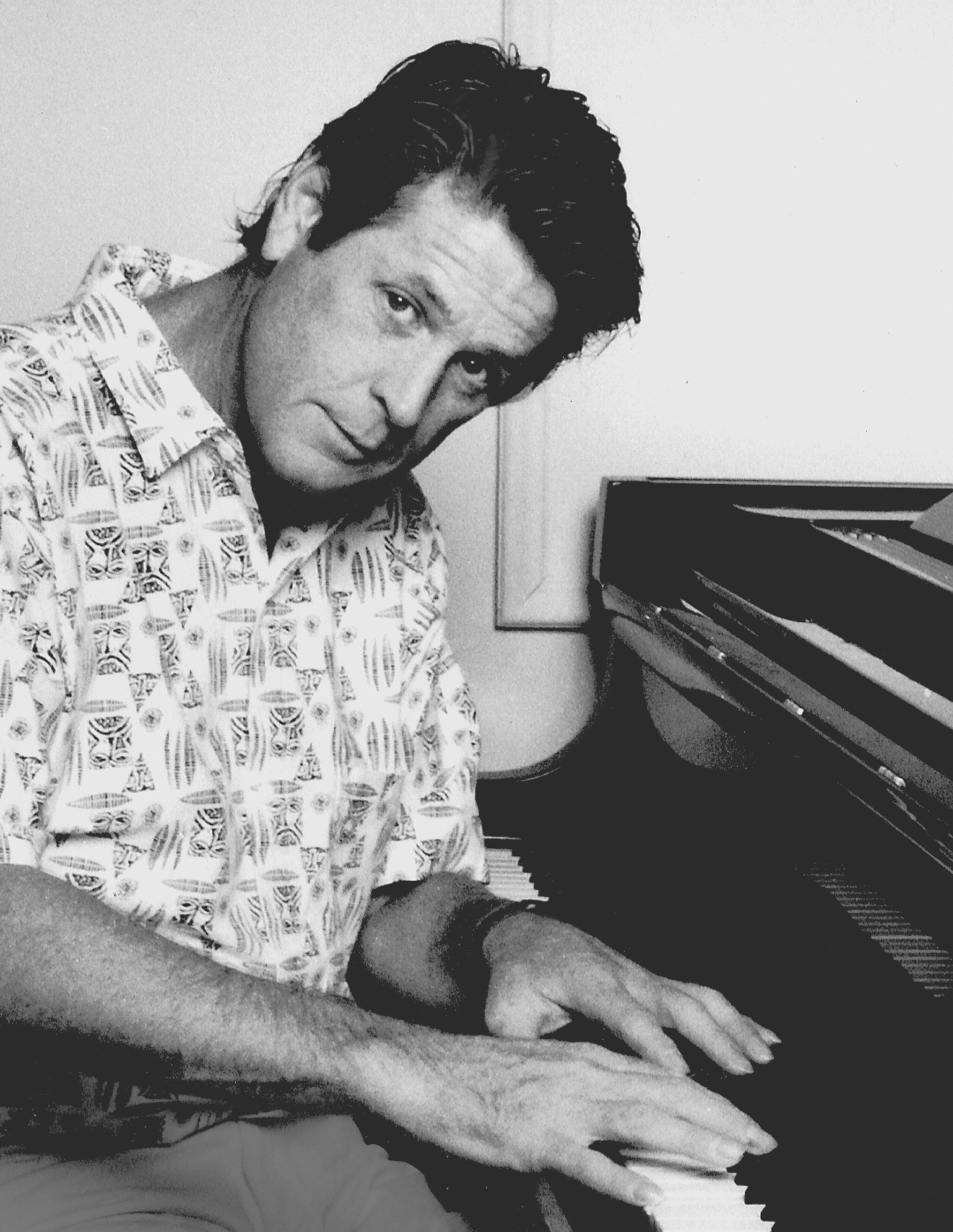
Brian Wilson
American musician (1942–2025)
Brian Douglas Wilson (June 20, 1942 – June 11, 2025) was an American musician, singer, songwriter and record producer who co-founded the Beach Boys and received widespread recognition as one of the most innovative and significant musical figures of his era. His work was distinguished for its high production values, complex harmonies and orchestrations, vocal layering, and introspective themes. He was also known for his versatile head voice and falsetto.
Wilson's formative influences included George Gershwin, the Four Freshmen, Phil Spector, and Burt Bacharach. In 1961, he began his professional career as a member of the Beach Boys, serving as the band's songwriter, producer, co-lead vocalist, bassist, keyboardist, and de facto leader. After signing with Capitol Records in 1962, he became the first pop musician credited for writing, arranging, producing, and performing his own material. He also produced acts such as the Honeys and American Spring. By the mid-1960s he had written or co-written more than two dozen U.S. Top 40 hits, including the number-ones "Surf City" (1963), "I Get Around" (1964), "Help Me, Rhonda" (1965), and "Good Vibrations" (1966). He is considered the first rock producer to apply the studio as an instrument and one of the first music producer auteurs.
Facing lifelong struggles with mental illness, Wilson had a nervous breakdown in late 1964 and subsequently withdrew from regular concert touring to focus on songwriting and production. This resulted in works of greater sophistication, such as the Beach Boys' Pet Sounds and his first credited solo release, "Caroline, No" (both 1966), as well as the unfinished album Smile. Branded a genius, by the late 1960s, his productivity and mental health had significantly declined, leading to periods marked by reclusion, overeating, and substance abuse. His first professional comeback yielded the almost solo effort The Beach Boys Love You (1977). In the 1980s, he formed a controversial creative and business partnership with his psychologist, Eugene Landy, and relaunched his solo career with the album Brian Wilson (1988). Wilson dissociated from Landy in 1991 and toured regularly from 1999 to 2022. He completed a version of Smile in 2004, earning him his greatest acclaim as a solo artist.
Heralding popular music's recognition as an art form, Wilson's accomplishments as a producer and composer helped initiate an era of unprecedented creative autonomy for label-signed acts. He contributed to the development of many music genres and movements, including the California sound, art pop, psychedelia, chamber pop, progressive music, punk, outsider, and sunshine pop. Since the 1980s, his influence has extended to styles such as post-punk, indie rock, emo, dream pop, Shibuya-kei, and chillwave. He received numerous industry awards, including two Grammy Awards and Kennedy Center Honors, as well as nominations for a Golden Globe Award and Primetime Emmy Award. He was inducted into the Rock and Roll Hall of Fame in 1988 and the Songwriters Hall of Fame in 2000. His life was dramatized in the 2014 biopic Love and Mercy. He died in 2025 of respiratory arrest.
Early life and musical training
Brian Douglas Wilson was born on June 20, 1942, at Centinela Hospital Medical Center in Inglewood, California, the first child of Audree Neva (née Korthof) and Murry Wilson, a machinist who later pursued songwriting part-time. Wilson's two younger brothers, Dennis and Carl, were born in 1944 and 1946. Shortly after Dennis's birth, the family moved from Inglewood to 3701 West 119th Street in nearby Hawthorne, California. Wilson, along with his siblings, suffered psychological and sporadic physical maltreatment from their father. His 2016 memoir characterizes his father as "violent" and "cruel"; however, it also suggests that certain narratives about the mistreatment had been overstated or unfounded.
From an early age, Wilson exhibited an aptitude for learning by ear. His father remembered how, after hearing only a few verses of "When the Caissons Go Rolling Along", the infant Wilson was able to reproduce its melody. Murry was a driving force in cultivating his children's musical talents. Wilson undertook six weeks of accordion lessons, and by ages seven and eight, he performed choir solos at church. His choir director declared him to have perfect pitch. Wilson owned an educational record titled The Instruments of the Orchestra and was a regular listener of KFWB, his favorite radio station at the time. Carl introduced him to R&B, and their uncle Charlie taught him boogie-woogie piano. Both brothers would frequently stay up listening to Johnny Otis's KFOX radio show, incorporating its R&B tracks into their musical lexicon.
One of Wilson's first forays into songwriting, penned when he was nine, was a reinterpretation of the lyrics to Stephen Foster's "Oh! Susannah". When he was 12, his family acquired an upright piano, and he began teaching himself to play piano by spending hours mastering his favorite songs. He learned how to write manuscript music through a friend of his father. Wilson sang with peers at school functions, as well as with family and friends at home, and guided his two brothers in learning harmony parts, which they would rehearse together. He also played piano obsessively after school, deconstructing the harmonies of the Four Freshmen by listening to short segments of their songs on a phonograph, then working to recreate the blended sounds note by note on the keyboard.
In high school, Wilson played quarterback for Hawthorne High's football team, played American Legion Baseball,, and ran cross-country in his senior year. At 15, he briefly worked part-time sweeping at a jewelry store, his only paid employment before his success in music. He also cleaned for his father's machining company, ABLE, on weekends. He auditioned to sing for the Original Sound Record Company's inaugural record release, but was deemed too young.
For his 16th birthday, Wilson received a portable two-track Wollensak tape recorder, allowing him to experiment with recording songs, group vocals, and rudimentary production techniques. He involved his friends around the piano and would most frequently harmonize with those from his senior class in these recordings. Fred Morgan, his high school music teacher, recalled his aptitude for learning Bach and Beethoven at 17. For his Senior Problems course in October 1959, he submitted an essay, "My Philosophy", in which he stated that his ambitions were to "make a name for myself [...] in music".
One of Wilson's earliest public performances was at a fall arts program at his high school. He enlisted his cousin and frequent singing partner Mike Love and, to entice Carl into the group, named the newly formed membership "Carl and the Passions". They performed songs by Dion and the Belmonts and the Four Freshmen, impressing classmate and musician, Al Jardine.
In September 1960, Wilson enrolled as a psychology major at El Camino Junior College in Los Angeles, also pursuing music. Disappointed by his teachers' disdain for pop music, he withdrew from college after about 18 months. By his account, he crafted his first entirely original melody, "Surfer Girl", in 1961, inspired by a Dion and the Belmonts rendition of "When You Wish Upon a Star". However, his close high school friends disputed his claim, recalling earlier original compositions.
Career
1961–1963: Formation of the Beach Boys and early production work
The three Wilson brothers, Love, and Jardine debuted their first music group together, called "the Pendletones", in the autumn of 1961. At Dennis's suggestion, Brian and Love co-wrote the group's first song, "Surfin'". Murry became their manager. Produced by Hite and Dorinda Morgan on Candix Records, "Surfin'" became a hit in Los Angeles and reached 75 on the national Billboard sales charts while the group's name was changed by Candix Records to the Beach Boys. Their major live debut was at the Ritchie Valens Memorial Dance on New Year's Eve, 1961. Days earlier, Wilson had received an electric bass from his father and quickly learned to play, prompting Jardine to switch to rhythm guitar.
When Candix Records faced financial difficulties and sold the Beach Boys' master recordings to another label, Murry ended their contract. As "Surfin'" faded from the charts, Wilson collaborated with local musician Gary Usher to produce demo recordings for new tracks, including "409" and "Surfin' Safari". Capitol Records were persuaded to release the demos as a single, achieving a double-sided national hit.
In 1962, Wilson and the Beach Boys signed a seven-year contract with Capitol Records under producer Nick Venet. During sessions for their debut album, Surfin' Safari, Wilson negotiated with Capitol to record the band outside the label's basement studios, which he deemed ill-suited for his group. At Wilson's insistence, Capitol permitted the Beach Boys to fund their own external sessions while retaining all rights to the recordings. He also secured production control over the album, though he was not credited for this role in the liner notes.
Content sourced from Wikipedia under CC BY-SA 4.0


