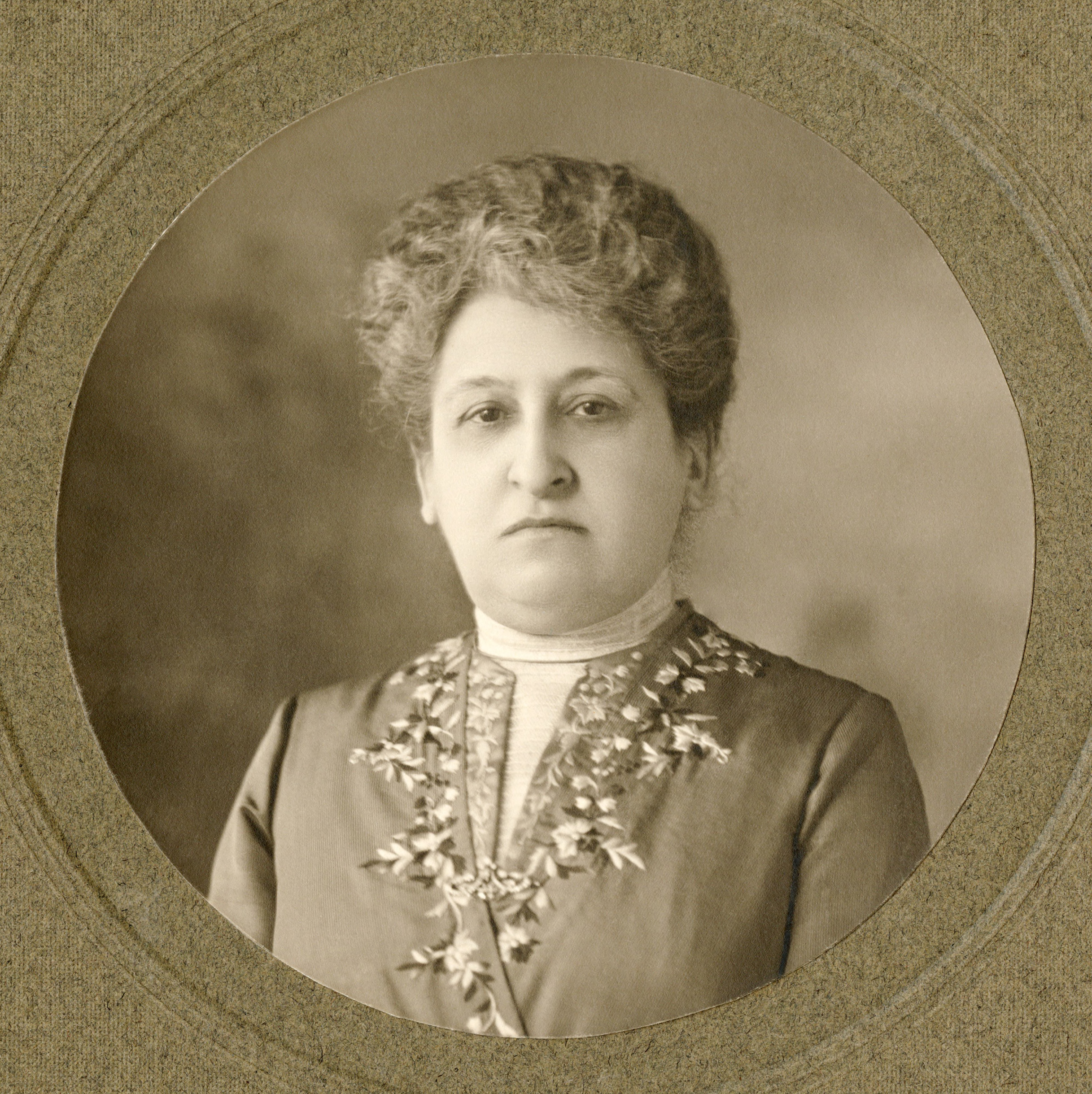
Aletta Jacobs
Dutch physician and feminist (1854–1929)
Aletta Henriëtte Jacobs (Dutch pronunciation: [aːˈlɛtaː ɦɑ̃ːriˈjɛtə ˈjaːkɔps]; 9 February 1854 – 10 August 1929) was a Dutch physician and women's suffrage activist. As the first woman officially to attend a Dutch university, she became one of the first female physicians in the Netherlands. In 1882, she founded the world's first birth control clinic and was a leader in both the Dutch and international women's movements. She led campaigns aimed at deregulating prostitution, improving women's working conditions, promoting peace and calling for women's right to vote.
Born in the mid-nineteenth century, Jacobs yearned to become a doctor like her father. Despite existing barriers, she fought to gain entry to higher education and graduated in 1879 with the first doctorate in medicine earned by a woman in the Netherlands. Providing medical services to women and children, she grew concerned over the health of working women, recognizing that as laws did not provide adequate protection for their health, their economic stability was compromised. She opened a free clinic to educate poor women about hygiene and child care and in 1882 expanded her services to include distribution of contraception information and devices. Though she continued to practice medicine until 1903, Jacobs increasingly turned her attention to activism with a view to improving women's lives.
From 1883, when Jacobs first challenged the authorities on women's right to vote, she strove throughout her life to change laws that limited women's access to equality. She was successful in her campaign to establish mandatory break laws in retail workers' employment and in attaining the vote for Dutch women in 1919. Involved in the international women's movement, Jacobs traveled throughout the world speaking about women's issues and documenting the socio-economic and political status of women. She was instrumental in the establishment of the Women's International League for Peace and Freedom and an active participant in the peace movement. She is recognized internationally for her contributions to women's rights and status.
Early life and education (1854–1879)
Aletta Henriëtte Jacobs was born on 9 February 1854 in Sappemeer, the Netherlands, to Anna de Jongh and Abraham Jacobs. She was the eighth of 11 children, born into a family of assimilated Jewish heritage. Her father was a doctor from whom she developed an interest from a young age in the field of medicine. She attended the village school and learned needlecraft, completing her education in 1867. At the time, there were no educational opportunities for women apart from finishing schools. She enrolled in one and attended for two weeks, but found it to be "idiotic" and a waste of time. To continue her education, Jacobs worked as an apprentice dressmaker and studied at home, where her mother taught her French and German. In addition, her father taught her Greek and Latin.
Wanting to become a doctor like her father, Jacobs faced challenges, as higher education in 19th-century Netherlands was not open to women students. A family friend, the hygienist Levy Ali Cohen, encouraged Jacobs to become a pharmacy assistant, after learning in 1869 that a woman had been allowed to take the examination. She prepared for the test, studying with her father, her brother Sam, who was a pharmacist, and Cohen, and passed in July 1870, earning a diploma. She was encouraged by Cohen and Samuel Siegmund Rosenstein, rector of the University of Groningen, to continue her studies for two years in preparation for the entry examination for university. She received permission from J.W.A. Renssen, the director of the Rijks Hogere Burgerschool (National Higher Secondary School) in Sappemeer to sit in on classes, becoming the first Dutch woman to attend high school. Learning that a male student who had passed his pharmacy examination was admitted to the university on the basis of his diploma, Jacobs wrote secretly to the chair of the Council of Ministers of the Netherlands, Johan Rudolph Thorbecke. She requested permission to begin her university studies prior to taking the entrance examination and was granted provisional approval by Thorbecke to attend as a one-year probationary student.
On 20 April 1871, Jacobs entered university, recognizing that other women's ability to pursue education would depend on her performance. When within months, news reached Jacobs' father that Thorbecke was mortally ill, Abraham insisted that his daughter be allowed to register without probation. On 30 May 1872, shortly after Thorbecke's death, Jacobs received the official notification of her admittance as a medical student. Despite periods of illness, she passed the preliminary part of her licensing examination on 12 April 1877 and the final test on 3 April 1878. Obtaining her state license to operate as a general practitioner in 1878, she began work on her doctoral thesis, Over localisatie van physiologische en pathologische verschijnselen in de groote hersenen (On the Localization of Physiological and Pathological Symptoms in the Cerebrum). At the time, the brain had not been studied much and brain physiology was an unusual choice for a dissertation. Graduating on 8 March 1879, Jacobs was the first woman to attend a Dutch university, as well as the first Dutch woman to receive a medical degree in the country, and the first to obtain a medical doctorate.
As news of her accomplishments appeared in newspapers throughout the country, Jacobs received numerous congratulatory letters. One came from a social reformer, Carel Victor Gerritsen, who encouraged her and made introductions on her behalf to other women physicians. Despite her father's disapproval, Jacobs and Gerritsen began a correspondence, though they would not meet for several years. After her graduation, she contributed to her education by observing women physicians at various London hospitals, including the Great Ormond Street Hospital, London School of Medicine for Women and New Hospital for Women, where she met Elizabeth Garrett Anderson, the first woman medical practitioner in England, and her sister, Millicent Garrett Fawcett. Both women were deeply involved in the fight for women's suffrage as well as other social issues, including birth control. She also met like-minded social reformers, including Annie Besant, Charles Bradlaugh, Charles Robert and George Drysdale, as well as Alice Vickery, who influenced her ideas on social reform.
Early career (1879–1887)
Returning to the Netherlands in September 1879 to attend a medical conference in Amsterdam, Jacobs received so many requests for medical services that she decided not to return to England, but instead opened an independent practice on the Herengracht canal to treat women patients. Her clinic, on the corner of Kattengat and Spuistraat was located in the Werkmansbond building. She was assisted by Cornélie Huygens in treating women and children, as women were not permitted to treat men. She grew increasingly concerned about the needs of working-class women and the poor conditions in which they lived and worked, realizing that impoverished women lacked knowledge of hygiene and child care. She began running biweekly clinics to advise them, but demand was so great she had to expand the sessions.
From her work with poor women, Jacobs recognized that repeated pregnancies, year after year, was not only impacting mothers' health, but causing high rates of infant mortality. Her contact with prostitutes led her to learn about and study sexually transmitted diseases, of which she had not previously been aware. In developing solutions for these women, Jacobs became convinced that reliable contraception would alleviate suffering and economic hardship resulting from too many children. Furthermore, it would improve the social welfare of society at large, preventing overpopulation. After reading an article by Wilhelm Mensinga on occlusive pessaries, Jacobs wrote to him, embarking on a lengthy correspondence. Convinced that diaphragms would help her patients, she performed a clinical trial across a mixed sampling of her clients. Finding the trial was successful, she introduced the method of birth control (still widely known to English speakers as the Dutch Cap) in the Netherlands and began counseling women on its use.
In 1882, Jacobs founded the first birth control clinic in the Netherlands and the first clinic in the world devoted solely to disseminating information on the topic. In her twice-weekly clinics for the poor, which were well-attended, she provided birth control information and a contraceptive device – Dutch pessary, free of charge. This practice was widely criticized by other physicians, including Catharine van Tussenbroek, the second Dutch woman to earn a medical degree. Physicians who argued against contraception maintained that it interfered with the "divine plan", encouraged extramarital sex, and would have a negative impact on fecundity and national growth. They saw unwanted pregnancy and venereal disease as apt punishment for sin.
Content sourced from Wikipedia under CC BY-SA 4.0


