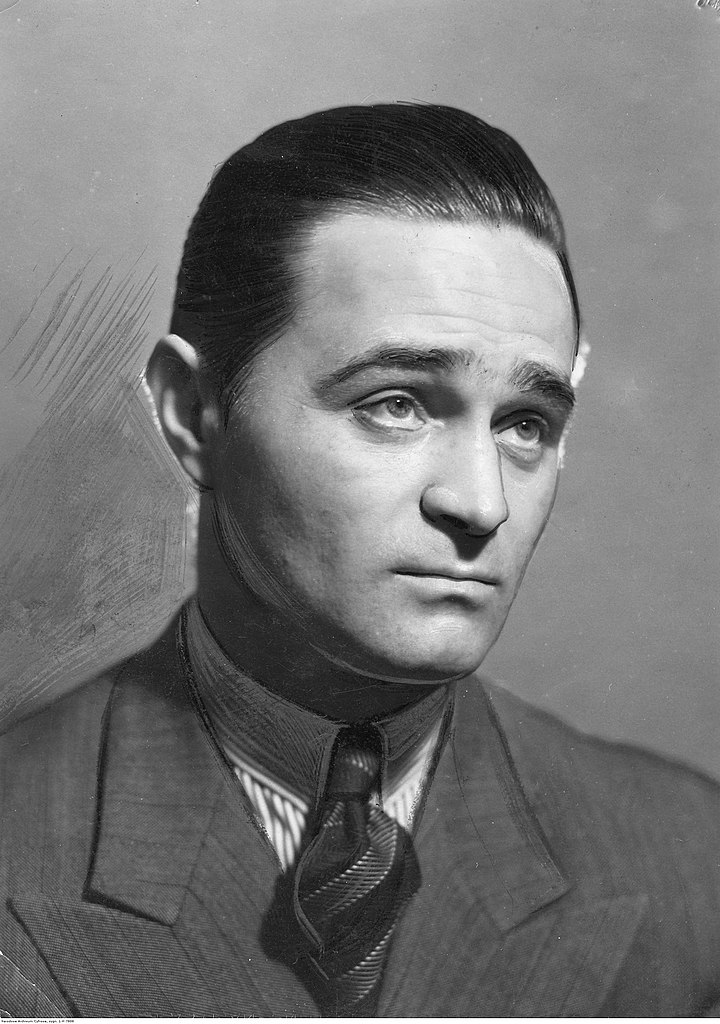
Adolf Dymsza
Polish comedy actor
Why this is trending
Interest in “Adolf Dymsza” spiked on Wikipedia on 2026-02-25.
Categorised under Entertainment, this article fits a familiar pattern. Articles in the entertainment category often trend when tied to award ceremonies, film releases, celebrity news, or viral social media moments.
GlyphSignal tracks these patterns daily, turning raw Wikipedia traffic data into a curated feed of what the world is curious about. Every spike tells a story.
Key Takeaways
- Adolf Dymsza (born Adolf Bagiński ; 7 April 1900 – 20 August 1975) was a Polish comedy actor of both the pre-World War II and post-war eras.
- He and Kazimierz Krukowski performed as the duo Lopek and Florek in kleynkunst productions at Qui Pro Quo and other noted Warsaw cabarets.
- " He was arguably the most popular Polish comic actor of the 1930s, Andrzej Wajda remarked once, that for him Dymsza and Bodo were symbols of pre-war Polish cinema in general.
- Life Dymsza was born Adolf Bagiński on 7 April 1900 in Warsaw, then in Russian Empire, to Adolf Sr.
- At the age of 15 he worked as a busboy in some of Warsaw's cabarets.
Adolf Dymsza (born Adolf Bagiński; 7 April 1900 – 20 August 1975) was a Polish comedy actor of both the pre-World War II and post-war eras. He starred in both theatre and film productions, mainly before World War II. He and Kazimierz Krukowski performed as the duo Lopek and Florek in kleynkunst productions at Qui Pro Quo and other noted Warsaw cabarets. Another pseudonym was "Dodek." He was arguably the most popular Polish comic actor of the 1930s, Andrzej Wajda remarked once, that for him Dymsza and Bodo were symbols of pre-war Polish cinema in general. To this day he is considered the king of Polish film comedy.
Life
Dymsza was born Adolf Bagiński on 7 April 1900 in Warsaw, then in Russian Empire, to Adolf Sr. and Matylda née Połądkiewicz. At the age of 15 he worked as a busboy in some of Warsaw's cabarets. He graduated from a local II Gymnasium and then studied at the Hipolit Wawelberg's Trade School. During World War I and the subsequent Polish-Bolshevik War he started his career as a dancer in cabarets and theatres of Warsaw, Minsk and Grodno. He returned to Warsaw after the war, but no theatre would hire him and he spent several years giving dance lessons and occasionally singing in cabarets. It is speculated that he might have appeared in a number of silent films in that period, none of them survive to our times however.
His debut came in 1925, when he was hired by the famous Qui Pro Quo cabaret as a singer and dancer, "immediately conquering the audience with his natural juvenile wit and temperamental performances of Warsaw street types." He remained part of Qui Pro Quo's crew until 1931, appearing on stage along such stars of contemporary Polish cabaret and cinema as Marian Hemar, Eugeniusz Bodo, Hanka Ordonówna, Mieczysław Fogg, Mira Zimińska, Zula Pogorzelska and Fryderyk Jarosy.
Content sourced from Wikipedia under CC BY-SA 4.0


